Sabadee & Korp Jai Lai Lai

The Communist Flag

A bit about the title – Sabadee & Korp Jai Lai Lai – these two sets of words (spelled phonetically) have been some our favorites during our Asian adventure.  They mean Hello and Thank you very much.

A View of Rice Fields from our Motorbike

Laos has been our best surprise during our trip and we are really glad we came now. Laos is a country some people don`t know exists and originally, it was not our plan to visit. But because its proximity to the 3 giant magnet tourist destinations, it made sense to do some research and check out what it had to offer and man, does it have a lot to offer. Scenery, culture, and a sense that the hours and days last longer made us want to spend more time here. The people are not in a hurry and just want to socialize and have fun. Afterall, why work so much if we can enjoy life right now even here, where people are not well off financially?


A lot of people don’t know this, but along with China, Vietnam and Cuba, Laos is part of the last group of communist countries in the world. Besides the red flag with the hammer and the sickle and the lack of large stores and chain restaurants, the life in Laos did not seem to be what a typical person would consider a Marxist country. Mercedes, Honda and a lot of Toyota cars can be found in the cities, Coke a Cola was ubiquitous and it doesn’t seem that people are oppressed. It has all the characteristics of a very poor rural country and, as a matter of fact, Laos is one of the poorest countries in the world

A Bike Ride in Northern Laos

It is approximately the size of Great Britain but with only 6 million people without many urban areas. Laos’ GDP is one the smallest of all Asia both in terms of size and per capita. There is a saying about the southeast asian countries: “the Vietnamese grow the rice, the Cambodians watch it grow and the Laotians listen it to grow.” And that seemed to hold true while we stayed here, although we saw a lot of them working in the never-ending emerald-green rice paddy fields from the north to south .

Karsts & Rice

Essentially a buddhist country, the communism here did not seem to affect the religiosity much. There are temples in every town and young boys are supposed to be a monk for a few years and live with other monks, dress in a saffron robe every day, learn more about buddhism, pray and stay away from materialism, trying to reach Nirvana. As we’ve learned, some of them are happy to get out from small rural towns and come to have good education and better living conditions in larger towns. In Luang Prabang some want to learn english and practice with tourists and it seems to them that we are as exotic as they are. But we agree that the sight of monks walking around the city with their orange umbrellas is exquisite.

Monks out for a stroll

It is hard to believe Laos still exists. A landlocked country surrounded by very powerful neighbors, Laos was attacked by them all while its existence. China, Vietnam, Cambodia and even the distant France have already invaded this piece of land where the mighty Mekong river makes up most of its western border. We are glad Laos is around, it’s kind like a melting pot where the language is very similar to Thai, the people look somewhat chinese, the Vietnamese hats are all over and it is easy to spot the most recent occupation with the cute french houses, large boulevards, the baguette and in some towns people even play petanque.

Wat in Luang Prabang

The landscape in the north is breathtaking with large mountain chains covered with thick green forests where the far south is more flat and less stunning but the Mekong is larger and stronger. Throughout the country, its people are the best treasure. Humble people, always smiling and very curious about us and how much we like Laos. In Laos you hardly need to bargain for something, because they don’t usually artificially increase the price for tourists, like the other countries do in the region.

Local Market in Luang Prabang

The food was excellent, especially in the north and center of the country. Dishes we did not even know about like the dried buffalo skin, fried river weed and the delicious banana flower salads were very exotic and mouth-watering. We are also going to miss the best refreshments in a hot summer day, the fresh tropical fruit shakes.
And of course, Laos has a treasure that should be the envy of all people in these countries who are known to provide watery-tasting beer – Beer Lao is, by far, the best we have had in this region. The dark version was even better and it cost from US$1-2 a 600 mL bottle. Their currency is called kip and US$ 1 is worth about 8.000 kip. English is spoken only in large touristic cities. In smaller towns can be more complicated to buy a bus ticket, get a room or eat in a restaurant. But, hey, we are the ones supposed to learn their language. Prices are very low and a meal would cost usually around US$ 2-3 and a budget hotel room was less than US$ 15 with AC and WiFi.

I want to Return

For a country we did not even plan to come, we ended up spending a total of 17 days and we are so glad we came to Laos now. We believe that the country will be changing soon and become more westernized and more capitalist. China has also been investing a lot of money and although the buses were always late, the chinese built roads were mostly impeccable. In the future, Laos will hopefully strike a good balance in accepting foreign investment and preserving their beautiful environment . Today there is a lot to see here, but soon it could change, so the time to see it is now.
Comments Off on Sabadee & Korp Jai Lai Lai

Not only a Canal…

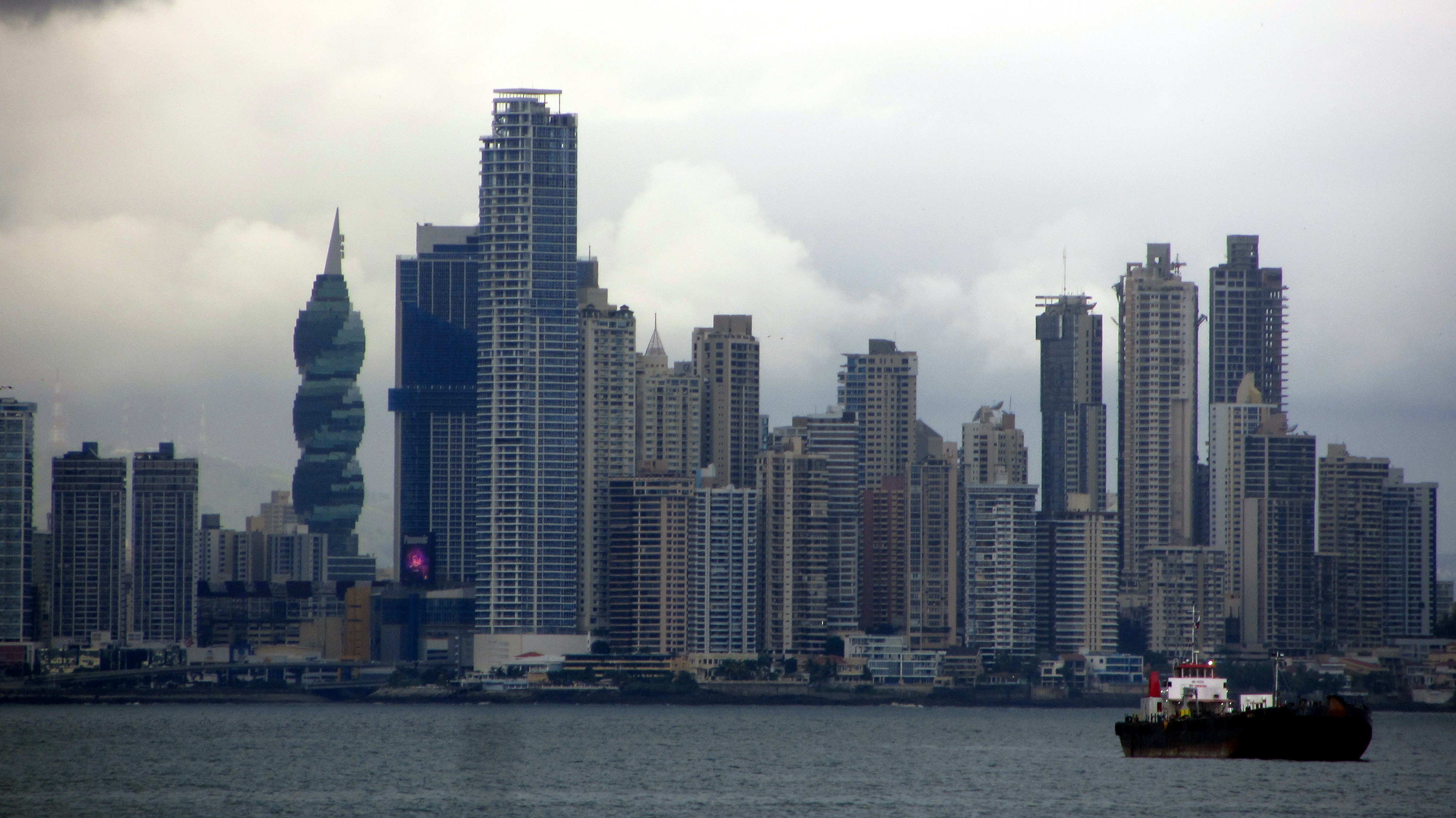
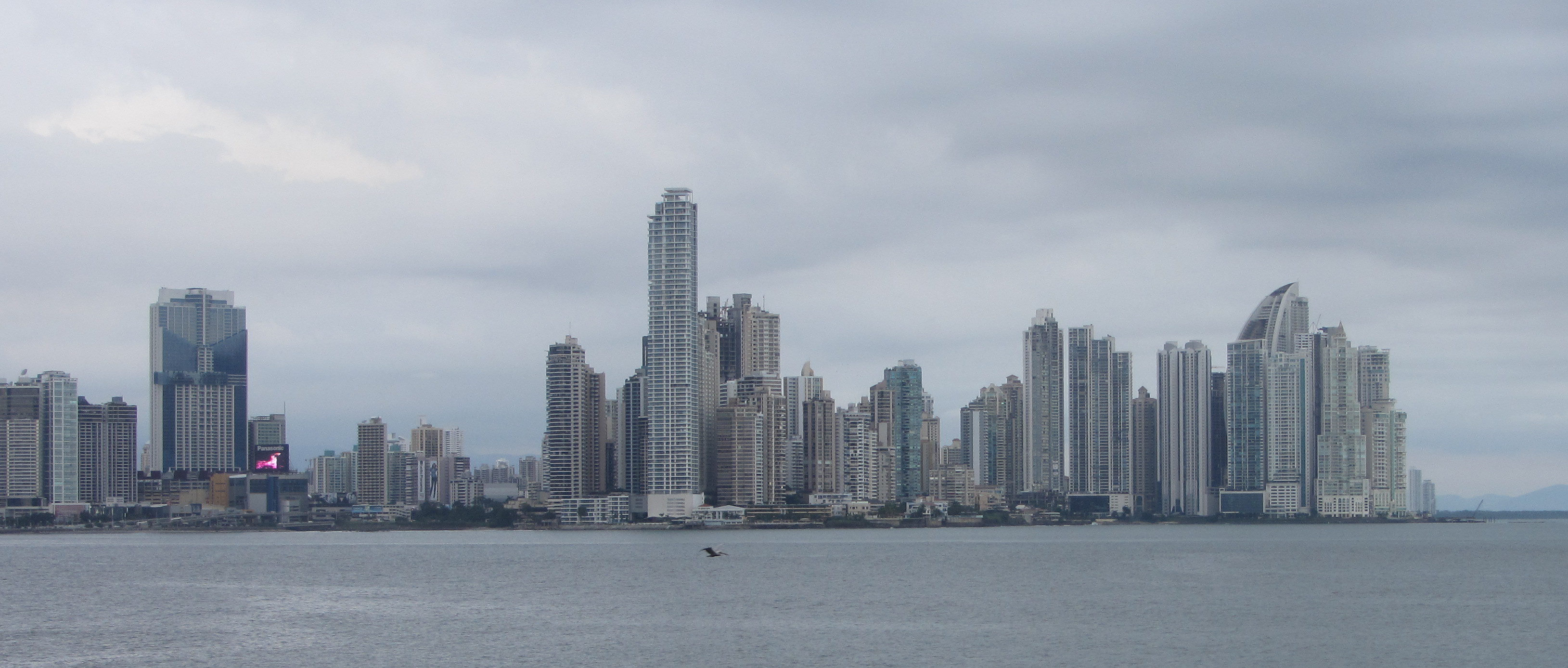
Parte do arranha-céu da cidade

Panama City has 800 thousand people & the metro area has about 1.2 million but city looks like it could house nearly the entire country of 3.4 million people.   Huge skyscrapers are already built or in the process of being built.  Strangely though, the skyline was completely dark at night, like no one lives in the buildings, weird.    All the new construction looks like it was plucked straight out of South Beach.

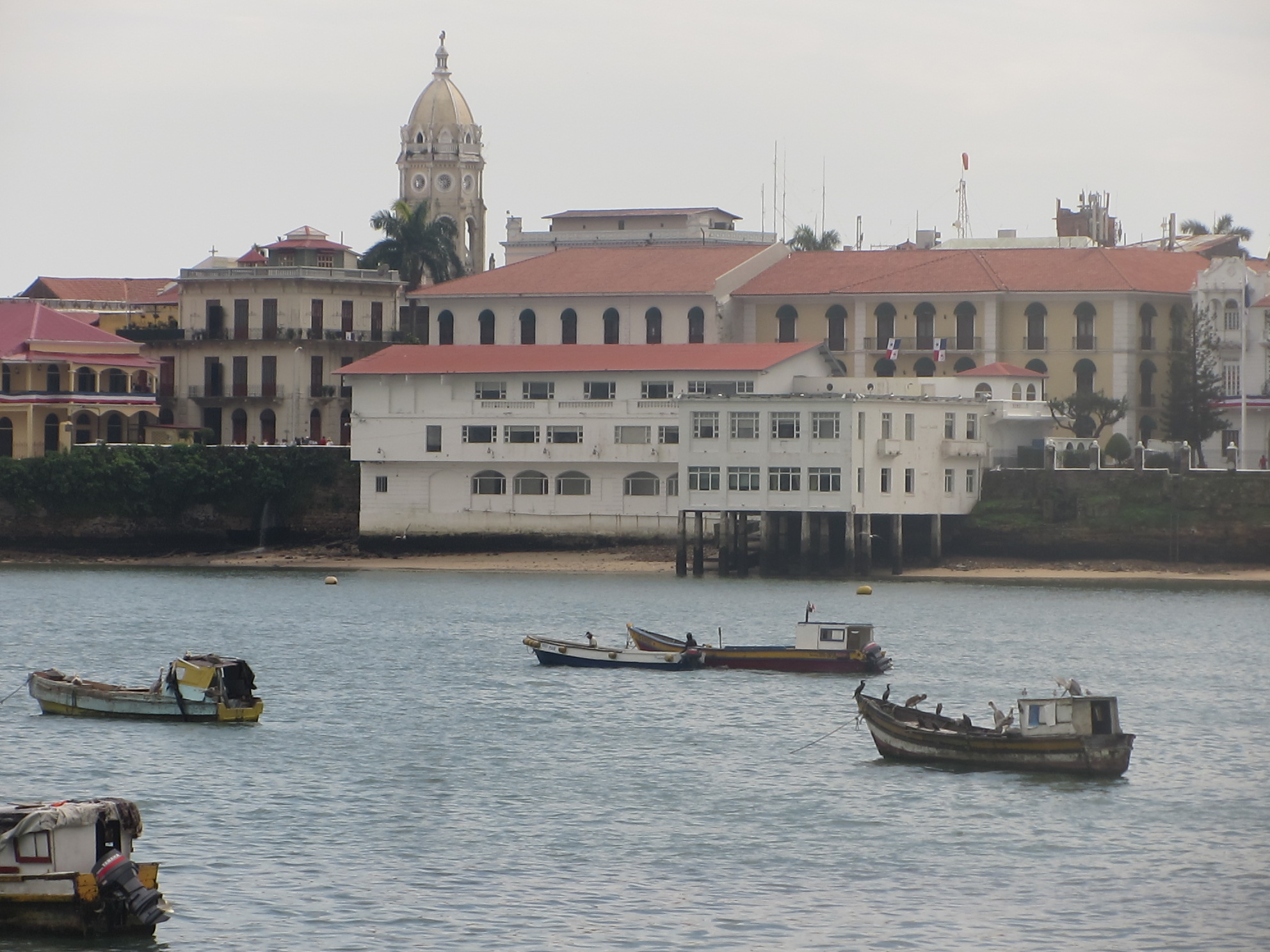
Vista do Casco Viejo

While we were in Panama City, we stayed in the neighborhood Casco Viejo.  It is the home to the president’s residence, and a lot of colonial style buildings.   The area is in process of being renovated.


Parte do Canal - Miraflores

No trip to Panama City would be complete without seeing the canal.  As the English would say, a few “facts and figures”: The canal is 48 miles long, it takes approximately 20 to 30 hours to go from one ocean to the other because of waiting times even though the canal only takes 8 hours to go through, and finally, the average ship pays approximately $54,000 USD for the privelege of going through the canal.  Further Specs for the canal are located here.  We spent some time at the Miraflores locks and saw a few ships on their journey to the Pacific ocean.  It’s really cool to see a ship being lifted up like that.

Overall we liked Panama city, but it was really a shock how Americanized the city is even though it is in the middle of Latin America.  Next up, Manaus, Brazil

Mais uma da cidade grande

ps. our camera has almost bit the dust. the view screen is half blank and taking pictures is now really difficult. we will be replacing the camera soon… in the mean time you can see the bad pics here .

Comments Off on Not only a Canal…

San Blah!

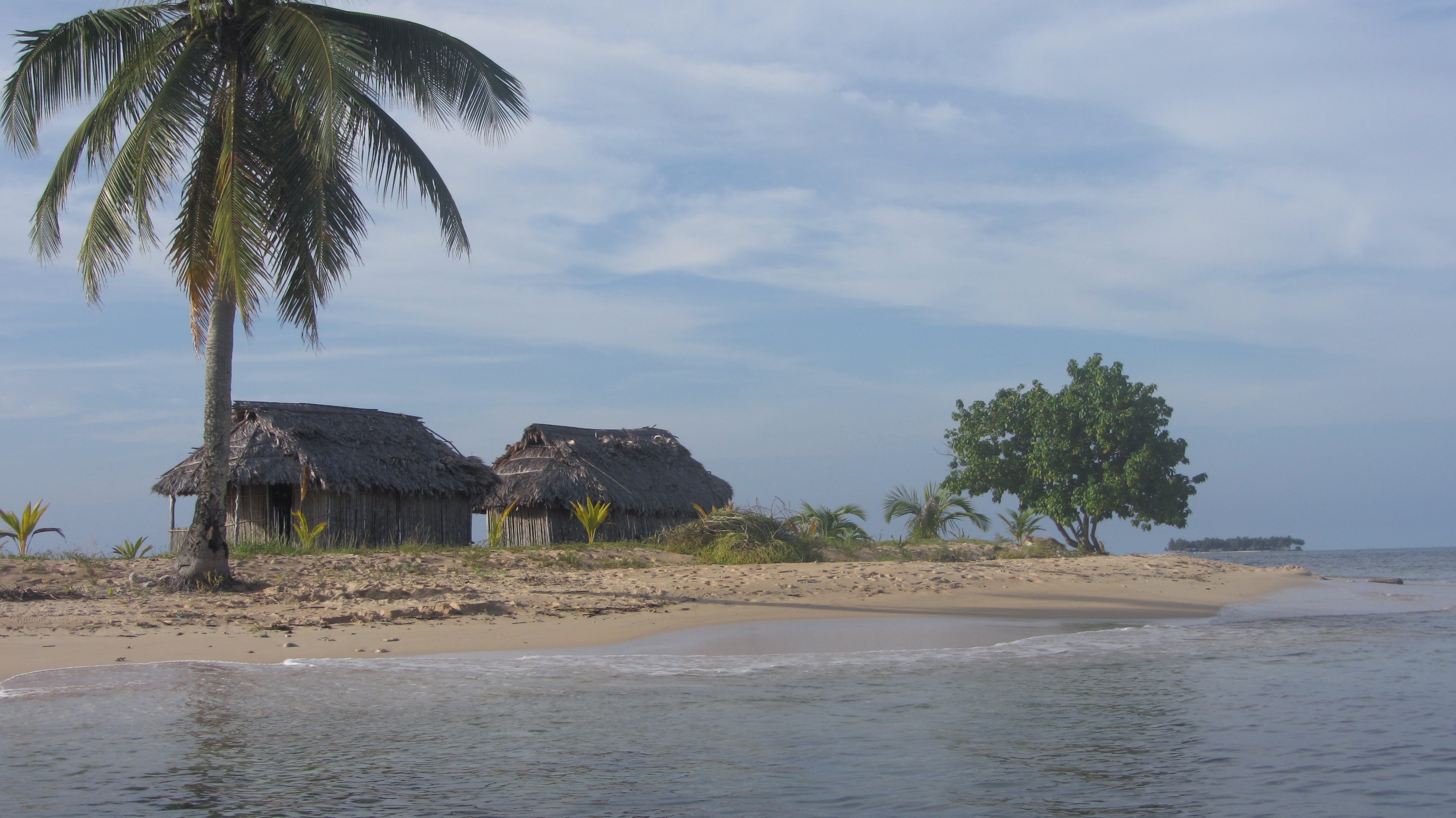
To break up our time in Panama City, we traveled to the San Blás archipelago.   We took a car service to El Povnir and then took a small boat to get there.  Here’s a map of Panama with the destination, when we crossed from the Pacific to the Atlantic ocean in 3 hours by car. The island is just off the coast.

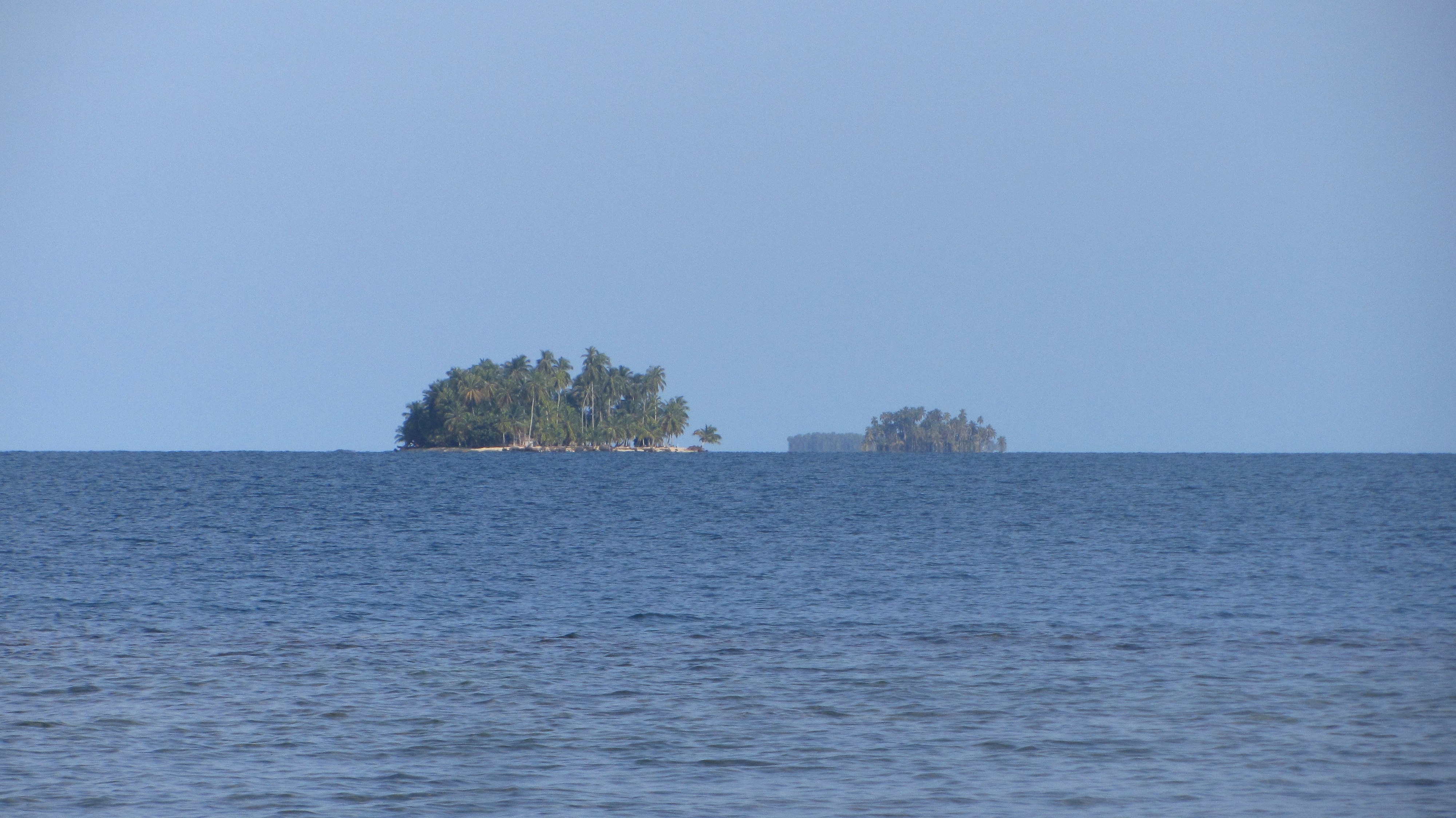
San Blas is made up of 300 to 400 islands in the Caribbean sea.   Although our trip was not successful, some of the islands were beautiful.  Imagine a deserted island, with ample shade trees and plentiful beaches.  Now imagine 20 islands all within a quarter mile of one another, this is San Blás.

A few islands of San Blas

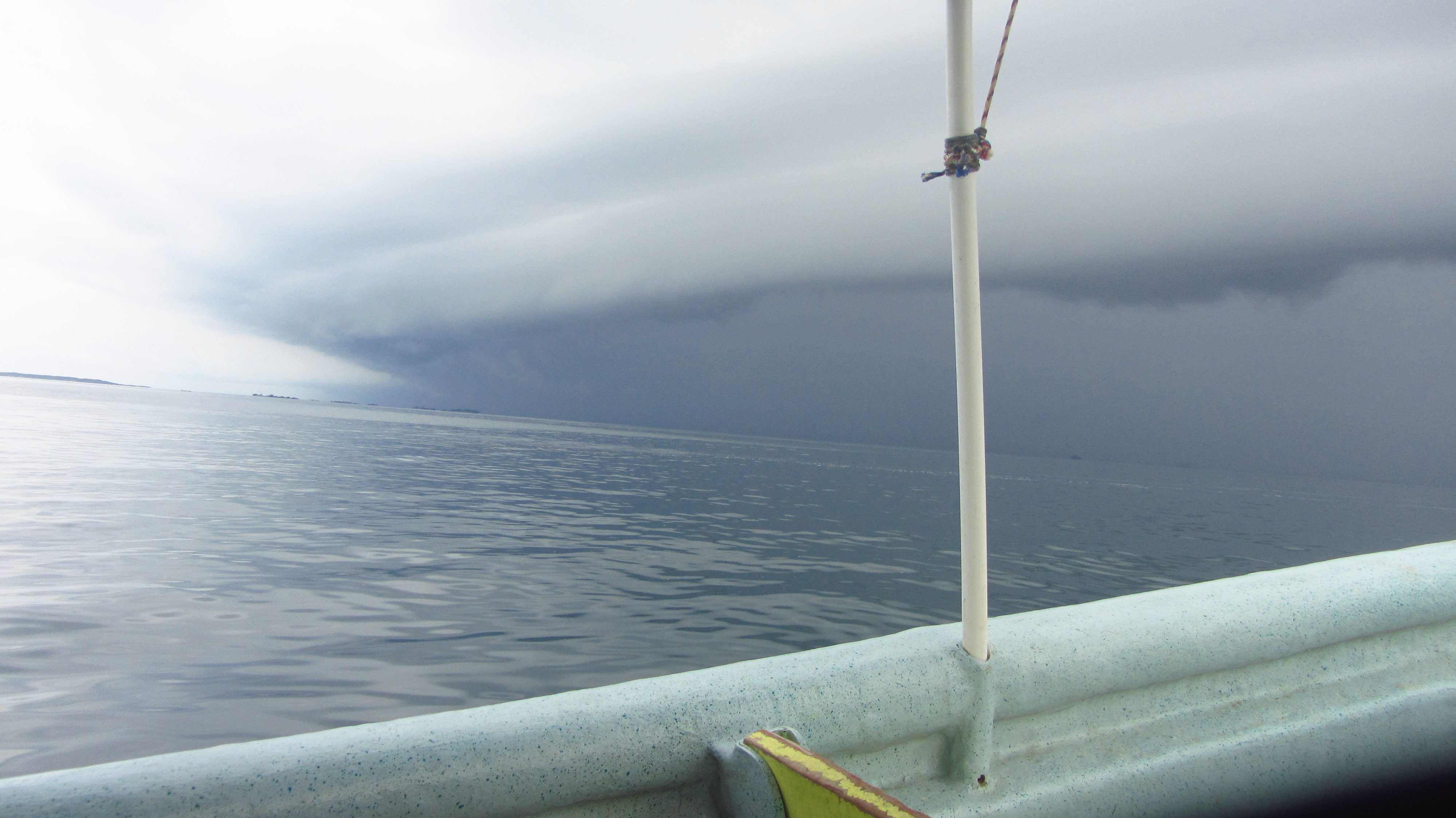
Our trip didn’t work because the weather didn’t cooperate with us & where we stayed wasn’t good.  The first day there a huge storm blew in; picture a scene from the Perfect Storm, ominous clouds rolling in with the occasional lightning strike off in the distance and a small group of tourists in a tiny little boat. The storm blew over and we got some descent sun that day, but clouds showed up again the next day. Island life & clouds are not a good combo.

Ominous Clouds

The worst thing about this trip was the place we stayed; to get a more “local” experience we decided to stay on the island where the largest number of indigenous people lived, close to 1000 people. Suffice to say, I don’t want to live how they live.  We both felt this was the most unsanitary conditions we had experienced the entire trip.

Although there was running water, there was no sink.  I couldn’t find soap for a long time & even when I did find some, it wasn’t particularly close to where they cooked.

All of this I could have dealt with but, where & how they went to the bathroom was too disturbing & really wanted to leave after experiencing it.

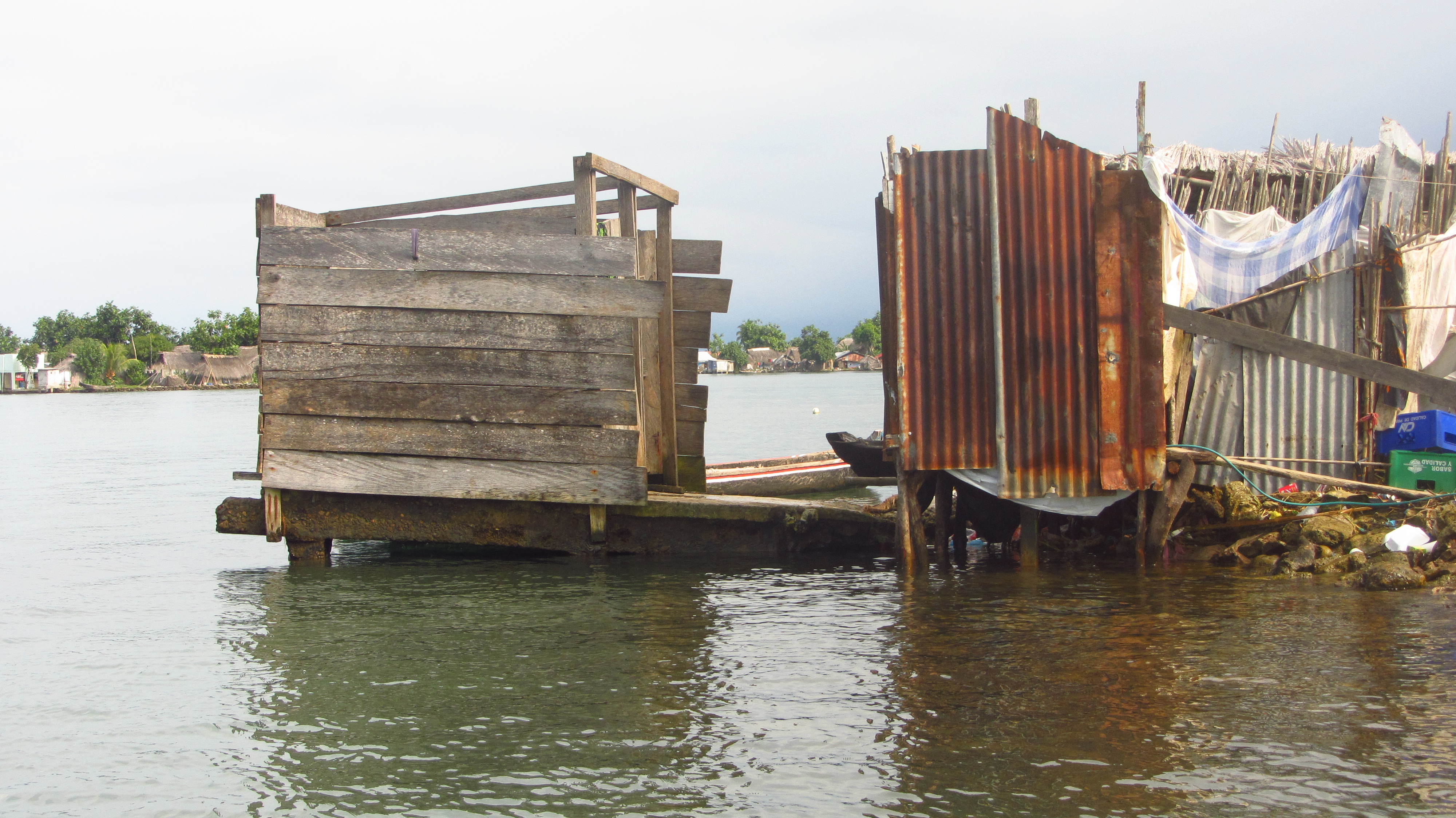
Typical outhouse over the ocean

The island is encompassed by quite a few outhouses.   Literally, your boat takes you to the island and the first thing you see is an outhouse.  The bathroom is essentially a toilet seat placed in such a way that one would piss & shit directly into the ocean.  There was no running water to wash your hands & there was, here’s the kicker, there was no toilet paper.

The fact that these people fish for their meals not one km away from where this island is located is a bit disturbing.

The whole thing just made me uncomfortable;  praise mother earth  for the clouds because we cut our trip short by one day.

I’m sure we could have had a better experience if we had chosen a different place to stay.

A better place to stay

If you care to see some more pics of San Blas, click here.

Next up, Panama city!

Comments Off on San Blah!

We were only getting fat and happy in Mexico

Chips and guacamole, the perfect marriage

Mexican food, although similar to Tex-Mex, has lots more flavor and enough spice set your mouth ablaze if you like. Above all, it’s super delicious.

It’s better to talk about the Mexican cuisine by regions, since each place we visited was quite different. It’s like the US where you get a completely different food if you go to Louisianna (cajun/French dishes), New Mexico (southweastern) or San Francisco (Asian influenced cuisine). We mainly stayed in these 3 different regions: Oaxaca, Guadalajara, and the Yucatan Peninsula .

1. Cocina Oaxaqueña – Oaxaca is famous for its moles. This kind of sauce made of chocolate that you marinate mainly with chicken and meat. In Oaxaca they have 7 different kinds of moles, one for every day of the week.

Tlayuda

Another dish we really ennjoyed was a kind of pizza in which the base is a gigantic corn tortilla called Tlayuda. I cannot forget the most strange plate we had with grasshoppers and the Oaxacan coffee and chocolate which are very famous throughout Mexico. Finally I have to mention the tamales filled with chicken that are just amazing in the region.

The most traditional drink is called Mezcal, a sweet, stronger form of tequila that you sipp with orange instead of the tradicional lime for the tequila.

2. Cocina de Guadalajara – When we got to Guadalajara we had to become familiar with all these new names in the restaurants. First the Pozoles, a soup with chicken, beef or seafood. Then the Pipián sauce that also can be marinated with different kinds of meat. What we like the most was Sope al Pastor, tortas ahogadas and the menudo, which is a tripe soup that people in the region eat for breakfast. For the first meal in the morning we used to have tortilla chips with eggs and a red or green sauce that were one of the best food we had called chilaquiles.

Evidently I have to mention about all the tequilas and margaritas we had in the Land of Tequila.

3. Cocina Yucateca – Lastly the cuisine we liked the most. Very influenced by the Mayan culture it is somewhat similar to the Guatemalan cuisine which is also very Mayan influenced. After much talk with people from the Yucatan one of their secrets seems to be that several dishes are marinated with a type of sour orange that is found in the region.

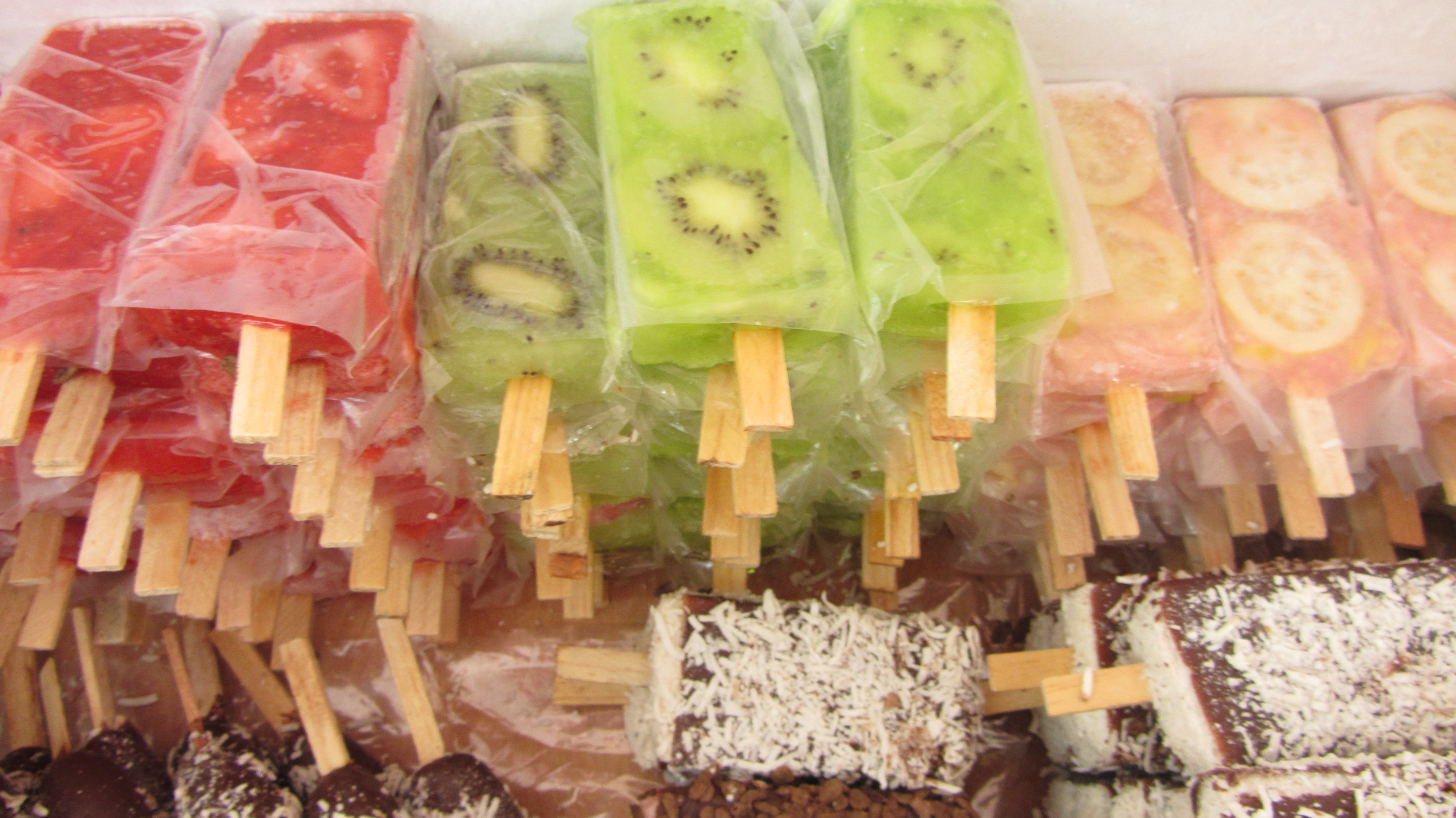
The best popsicle ever, only real fruit, no sugar added

The most known dish is the fatty Conchinita Pibil which pork shoulder in a sauce full of spices and is traditionally cooked in banana leaves. The lime soup is very simple, but “muy rica”. The Tikinxic fish also cooked in a banana leave melts in your mouth. Panuchos are a kind of tacos with black beans. All that you have the option to use some of the pepper sauces they have, the stronger one is the “habanero”, WOW just a tiny bit and your mouth is on fire.

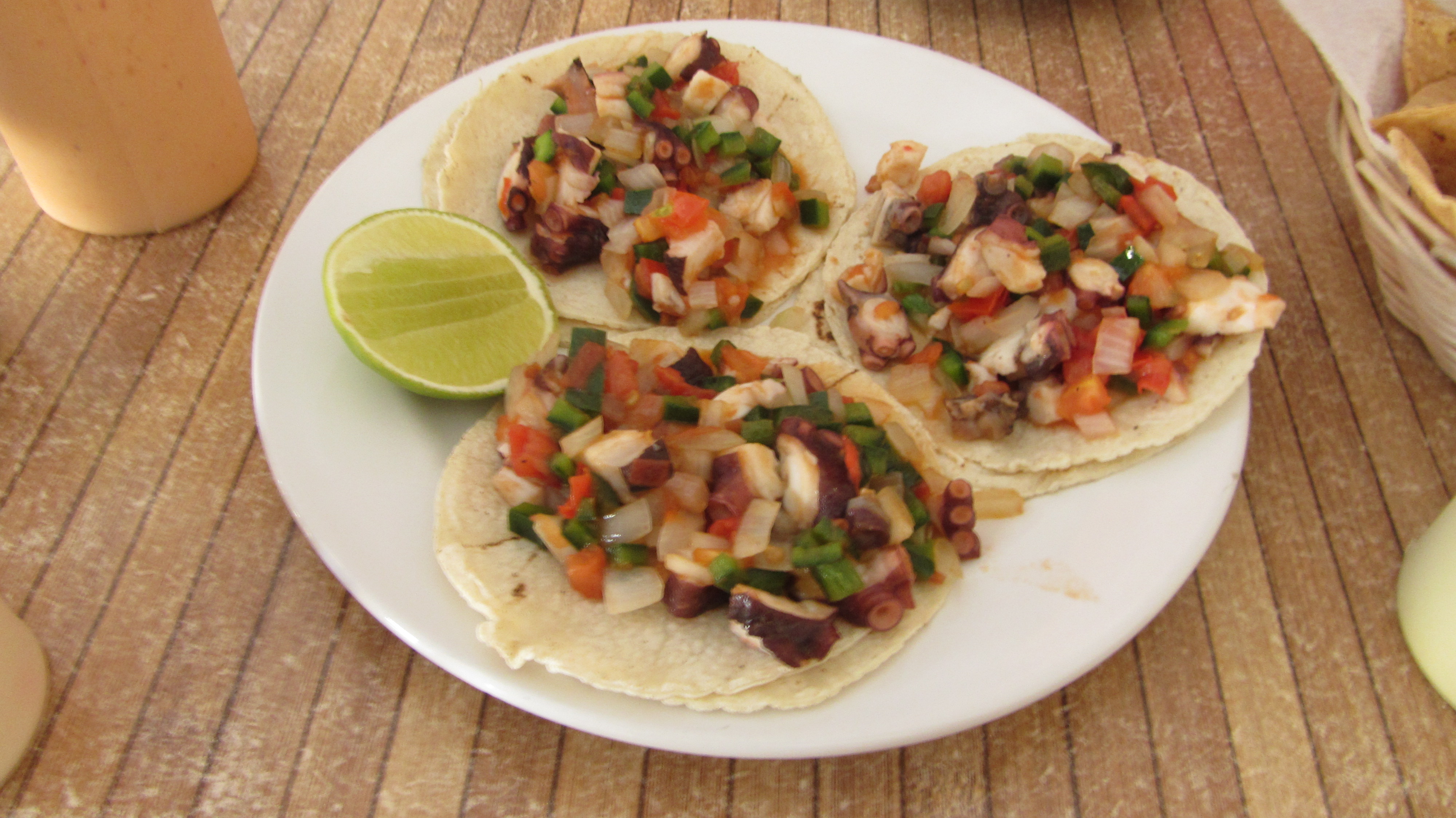
Octopus Taco

Finally I would like to make a special mention to the Tacos. These delicatassens are one of the best things in Mexico, nothing compared to what we have in the States. The corn tortillas (usually two) are covered with a large amount of meat, or chicken, or rib meat, or fish, or tripes, or tongue, or head meat, or sausage, or even brains. You can also find them on every corner and is very cheap, about US$ 0.5 – 0.75 each.

The only problem with mexican food is that for sure, you are going back home a little heavier, but it is all for a good reason.

What we could look forward to If only we stayed a little longer in Mexico

Some of the dishes we had are here.

Comments Off on We were only getting fat and happy in Mexico

Ficando gordos, mas felizes no Mexico

Chips and guacamole, the perfect marriage

Acho que é melhor falar sobre a comida por regiões onde estivemos no México, pois todas elas são bem diferentes umas das outras. É mais ou menos como no Brasil, onde a cozinha mineira é bem diferente da baiana e da paraense. Estivemos em 4 regiões distintas cada uma com seu sabor, mas não vamos falar da capital, porque não exploramos muito essa região.

1. Cocina Oaxaqueña – Oaxaca é famosa pelos seus moles. Mole (não é isso que você está pensando) é um molho cuja base é o chocolate. Nessa região existem até 7 tipos diferentes de moles. Eu só conhecia um até então, mas os de Oaxaca foram sem dúvida os melhores pratos com mole que já comi até hoje.

Tlayuda

Outro prato desconhecido que nós adoramos foi a Tlayuda (até o nome é legal). Uma espécie de pizza mexicana, cuja massa é feita de tortilha de milho. Tem os chapulines (gafanhotos), que sem dúvida foi o prato mais exótico que comemos. . Recomendo também o chocolate e o café de Oaxaca que são bastante famosos. E por último os tamales, que é uma espécie de pamonha com frango no meio.
A bebida local é o Mezcal, que é muito parecida com a tequila, mas um pouco mais doce. E tira-se o gosto com laranja ao invés de limão.

2. Cocina de Guadalajara – Quando chegamos nessa cidade, fomos bombardeados por nomes de pratos diferentes. Os Pozoles são uma sopa de origem indígena que pode ser feita com frango, carne e camarão. Pipián é um molho com semente de abóbora que se usa com frango também . O que nós mais gostamos foram os sopes ao pastor, as tortas ahogadas e o menudo, que é uma sopa feita de tripas que eles comem de manhã. Ao invés de ter tripas no café nós normalmente tínhamos os famosos chilaquiles, que são tortilhas fritas com ovos em cima, simplesmente sensacional!!!!! Não posso deixar de falar que tomamos muita tequila e vários tipos diferentes de margaritas na terra onde a tequila foi criada.

3. Cocina Yucateca – Finalmente a cozinha que nós achamos mais rica e deliciosa. Totalmente influenciada pela cultura Maia é muito parecida com a cozinha da Guatemala, que também tem a mesma origem indígena. Falando com algumas pessoas da região eles nos disseram que eles põem uma laranja azeda que é típica da região em quases todos os pratos. Acho que esse é um dos segredos do sabor especial das comidas daqui, além das dezenas de temperos que são geralmente adicionados.

The best popsicle ever, only real fruit, no sugar added

O prato mais difundido se chama Conchinita Pibil, que é basicamente porco banhado num molho cheio de condimentos e tradicionalmente cozido na folha de bananeira. A sopa de lima é bem simples e um espetáculo. O peixe Tikinxic também é cozido na folha da bananeira e se dissolve na sua boca. Os panuchos são uma espécie de tacos com feijão, deliciosos. Tudo isso com muita pimenta, a mais forte chamada “habanera”.

Octopus Taco

Por fim tenho que fazer uma menção honrosa aos TACOS. Esses pedacinhos do céu são uma das melhores coisas do México. Nada comparado com as imitações que vemos nos States. As tortilhas de milho (geralmente duas) são cobertas por uma enorme quantidade de carne, ou de frango, ou carne de costela, de peixe, de língua, de tripa, de linguiça, de carne da cabeça do boi e até mesmo de cérebro. Pode-se encontrar em todas as esquinas bem baratinho e todos os que provamos eram sempre de lamber os beiços.

What we could look forward to If only we stayed a little longer in Mexico

Nesse link vocês podem ver mais fotos.

PS: Tõ muito feliz que depois de 10 anos consegui finalmente encontrar os acentos nessa merda de teclado americano

3 Comments